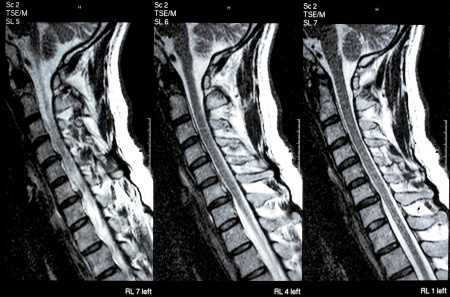
I performed a full neurological examination of the plaintiff. A study of his cervical spine showed it was deformed. The radiologist’s impression of his cervical spine was that there were mild degenerative changes most pronounced at C6-7. A sensory exam of the plaintiff’s left hand revealed sensory loss in the anterior two-thirds of the first left finger.
It is my opinion to a reasonable degree of medical certainty that plaintiff sustained a cervical disc herniation leading to pain and numbness in his left hand and fingers. It is further my opinion to a reasonable degree of medical certainty that his pain and numbness in his left hand and fingers became permanent. The cervical radioculopathy caused nerve damage in his left hand and fingers, resulting in pain and numbness. The nerve damage can be corrected by regeneration of the nerves. However, any nerve regeneration will occur during the first 12 to 18 months. Thereafter, any remaining nerve injury is generally permanent.
Plaintiff’s numbness in his left hand and fingers does not allow him to safely and reliably use his left hand and fingers to hold and use forceps or other instruments during surgical procedures. As a result of the numbness, he does not have the requisite fine motor skill or feeling in his left hand and fingers to perform required procedures.
It is my opinion to a reasonable degree of medical certainty that his injuries, pain and numbness caused him to discontinue his surgical practice and pursue another occupation.
At all relevant times, plaintiff satisfied the requirements of the Claim Information Section applying to benefits. He has experienced a loss of earnings equal to or greater than 20% of his prior earnings as a result of his neurological injuries. The defendant insurer breached the terms of the disability policy by failing to pay the plaintiff residual disability benefits.
The expert has been board certified by the American Board of Psychiatry and Neurology for more than 30 years.