
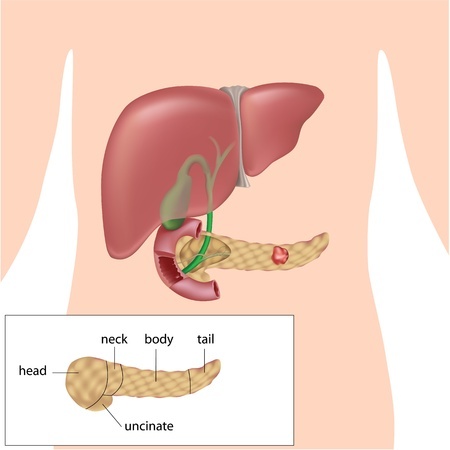
A pathology expert witness advises on a case involving the delayed diagnosis of pancreatic cancer. Plaintiff was admitted to a Pittsburgh hospital because of abdominal pain and acute weight loss. He was diagnosed with biliary pancreatitis with possible pancreatic pseudocyst. A biopsy showed inflammatory tissue that was consistent with pancreatitis. A week later, a CT scan found gallstones, inflammation in the region of the gallbladder and pancreas and a cystic pancreatic mass that raised the possibility of pancreatic cancer. Another biopsy of the pancreatic mass showed inflammatory tissue and no evidence of malignancy. However, because of the possibility of the mass being pancreatic cancer, defendant doctors performed a cholecystectomy with cholangiogram, common bile duct exploration and both visual and tactile evaluation of the cystic pancreatic mass. The doctors concluded that the pancreatic mass was contained, inflammatory in nature, and consistent with benign pancreatitis rather than malignancy.
Because the pancreatic mass persisted, plaintiff eventually underwent an endoscopic ultrasound with transduodenal pancreatic biopsy, which disclosed adenocarcinoma. He subsequently had a Whipple procedure, nearly a year after his initial procedure. He underwent chemotherapy and remains disease free.
Plaintiff sued the defendant surgeons and the hospitals that performed the pathology examinations on grounds that their failure to diagnose his cancer during the initial surgery caused him to undergo the second surgery.