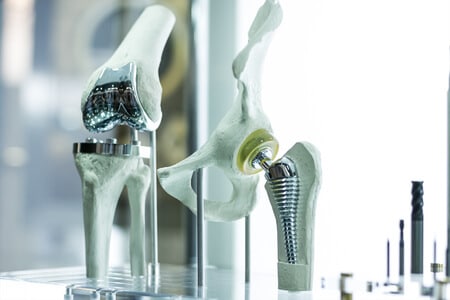
This kinesiology case involves a male patient who underwent a ceramic total hip replacement surgery due to degenerative arthritis and chronic hip pain. The patient complained of constant pain at approximately six weeks after the surgery, which was isolated to the gluteal fold region. It also radiated down his hamstring. Less then three months after the initial procedure, the patient underwent an open reduction and internal fixation due to non-union of the trochanteric site. Additionally, a revision procedure of the femoral component was conducted due to device loosening. Five months after his initial procedure, the patient sustained a dislocation of the hip that required a closed reduction. After several other complications, the patient required a total hip revision that was performed six months after his initial hip surgery.
Question(s) For Expert Witness
- 1. How could this dislocation and revision procedure have been avoided?
Expert Witness Response E-000626

It sounds like there was a fracture that went unrecognized for some time, which would be the result of the complication and the need for a revision procedure. Dislocation is the most common complication of hip replacement surgery. At surgery, the femoral head is taken out of the socket, hip implants are placed, and the hip is put back into the proper position. It takes eight to twelve weeks for the soft tissues injured or cut during surgery to heal. During this period, the hip ball can come out of the socket. The chance of this is diminished if less tissue is cut, if the tissue cut is repaired, and if large diameter head balls are used. Surgeons who perform more of the operations each year tend to have fewer patients dislocate. Doing the surgery from an anterior approach seems to lower dislocation rates when small diameter heads are used, but the benefit has not been shown when compared to modern posterior incisions with the use of larger diameter heads. Patients can decrease the risk further by keeping the leg out of certain positions during the first few months after surgery. Use of alcohol by patients during this early period is also associated with an increased rate of dislocation.
Contact this expert witness
Related Posts
This case involves a twenty-five-year-old female patient who sustained a puncture wound on her foot while vacationing in the Caribbean. The patient presented to her family doctor with complaints of severe pain at the site of the injury and on…
This case involves the birth of two twin babies who had no prenatal care and were born prematurely to a mother who experienced significant medical complications during the delivery. The mother is a single parent with a low IQ and…