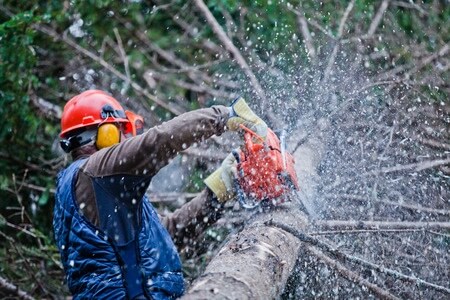
I am familiar with various chainsaw models, especially those made between 1976-77 when I bucked logs at a sawmill. These saws were manufactured before any safety features were included; of most interest here, a chain brake, which is designed to stop the chain in event of a kickback. Unless the chainsaw in question has a chain brake, and that brake was not in serviceable condition, servicing of the saw is not at issue here. Blaming the service shop for the accident would be like servicing a 1960 automobile and then blaming the shop for not servicing the seat belts and airbags – they don’t exist. One could point out that the shop might have been more prudent to advise the saw owner to retire the saw and purchase a modern saw, but I see no obligation on the part of the servicer to do so. And, maybe the shop did advise that. In any case, the servicing shop has no control over how the saw is used.
Two factors are of an issue here: improper use of the saw, and use of an old saw with no modern safety features.
By OSHA standards, the employer is responsible for ensuring that workers are issued personal protective equipment and are properly trained, even if the worker is experienced at other job sites. In this case, had the employer issued a modern saw with modern safety features, it sounds unlikely that the accident would have occurred. Kickback is a common and dangerous accident that is well-known in the logging and chainsaw industry. Modern saws include a chain brake and the better saws incorporate an inertia-activated chain brake that works really well. Modern saws under a certain size are also required to be sold with a safety bar and safety chain. I think this size saw falls into that category, but would need to research that better. These safety features have been required since roughly 1980. Issuing an old saw like this is really uncommon. In the logging industry, most chainsaws wear out in 6 months to 2 years and are then replaced. Also, most sawhands are responsible for procuring and maintaining their own saws. It sounds like the employer depended on the employee to ensure proper safety based on the employee’s experience. Nevertheless, it is the employer’s responsibility to ensure proper safety gear and training of the employee.