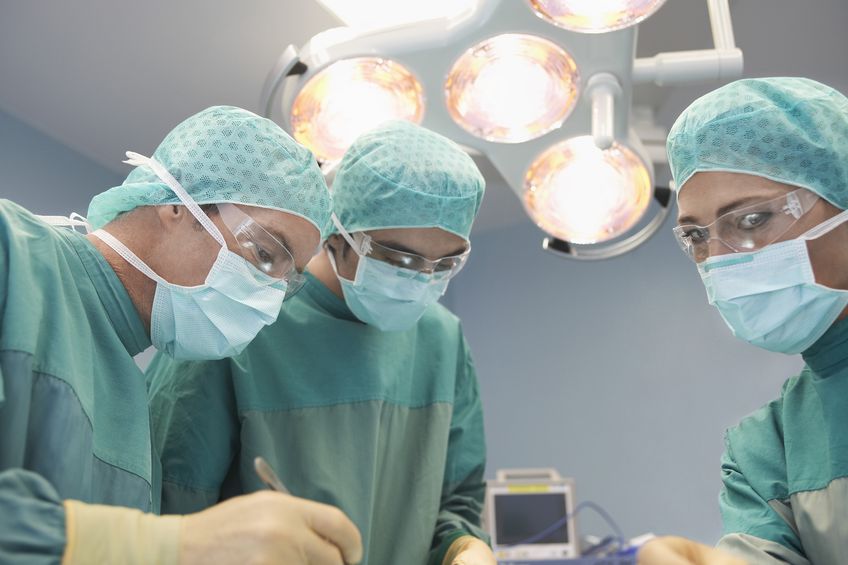
A gynecology expert witness opines on a case of an ovarian cancer patient who suffered a bilateral ureteral injury during a total abdominal hysterectomy with bilateral salpingo-oophorectomy. This case involves a sixty-five-year old female patient with a past medical history of adult baby powder use, rheumatoid arthritis, and systemic lupus erythematosus. The patient presented to her primary care physician complaining of a six month history of pelvic pain. She described the pain as severe and said that it was increasing in severity. The physician performed an ultrasound scan to investigate. The ultrasound revealed a large ovarian mass which the physician suspected to be malignant. This prompted the physician to order blood work for CEA and CA 125 tumor markers. The CEA level returned in the high range of 6.4 and the CA 125 was high at 110. The patient was then referred for surgical intervention and underwent a total abdominal hysterectomy with bilateral salpingo-oophorectomy that was reported to be conducted without complication but the patient demonstrated some difficulty post-operatively. The patient’s BUN/Cr continued to rise dramatically and she had a persistent fever with leukocytosis on the subsequent post-operative days. The patient was taken back into surgery after a CT scan of the abdomen showed fluid buildup in the pelvis. Further work-up revealed evidence of ureteral injury during the first resection procedure and the patient required re-implantation of the ureters to avoid permanent nephrostomy tube therapy. Furthermore the patient’s cancer was inadequately staged after her primary resection procedure and required an additional resection of the cervix that was only partially successful due to extensive scarring and fibrosis. The patient had a poor overall prognosis after her care at this institution and the chance of recurrence after her treatment was significant.