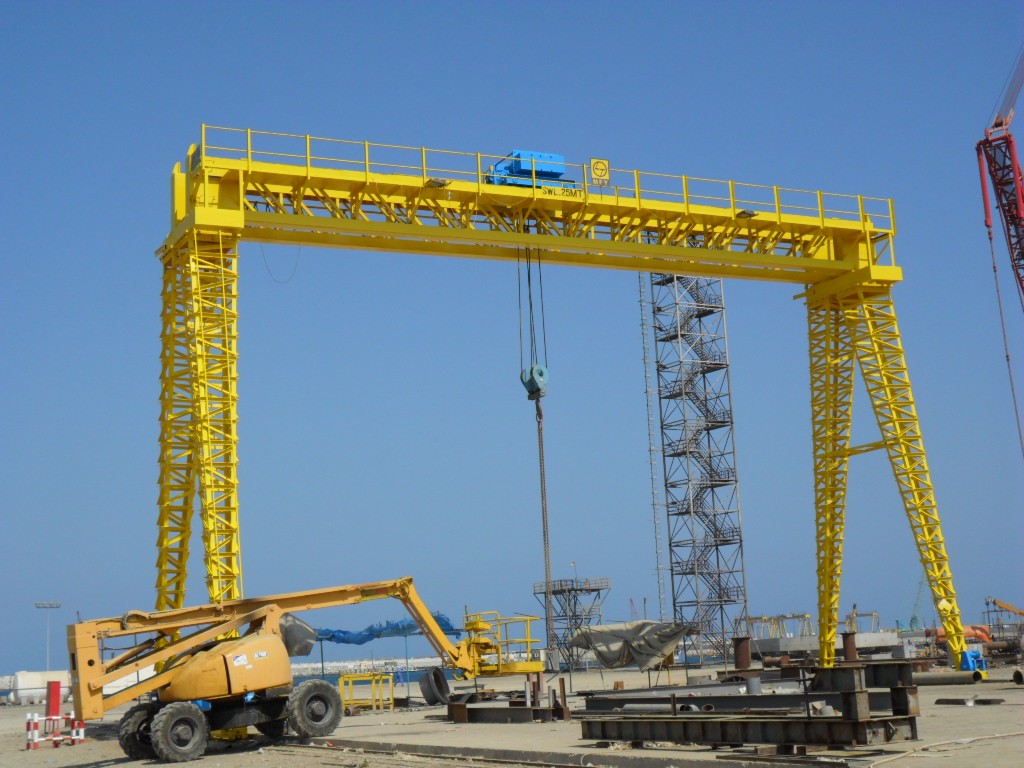
This accident was caused by the failure of several inspection companies to properly inspect and notify the employer of the hazards associated with the unguarded and non-compliant, rotating drive-shaft couplings, as well as the failure of the crane modifier, to use proper length bolts on the coupling for the drive shaft when they lengthened the span of the crane. Both of these issues directly led to the accident that caused the fatal injuries.
OSHA and crane industry standards are replete with references to guarding hazards associated with machine motion, specifically couplings and snag hazards created by rotary movement. It is incumbent upon equipment designers to assess potential hazards and bring the hazards associated with machinery to their lowest possible level. In the case of the additional coupling required when the span of the crane was increased, the machine modifiers, who for all intents and purposes became the crane designer when they performed this modification, chose none of the top five means to protect personnel from the snag hazard created when bolts were used that were longer than required for the coupling. Additionally, the use of a different style of coupling permitted the snag hazard to be more accessible, which increased the likelihood of the type of situation that led to the accident. This hazard could have been eliminated, or certainly dramatically reduced, by utilizing the same type of coupling and length of bolts that were already on the crane in numerous locations along the length of the bridge drive shaft. Thus, the technological feasibility was already proved, and the economic impact to provide the same components was essentially zero compared to what was provided by the crane modifier.
The expert is a mechanical engineer who has more than 20 years of experience in manufacturing engineering working with large equipment similar to and including the type of crane at issue. He has been a guest lecturer in safety design for engineers.