
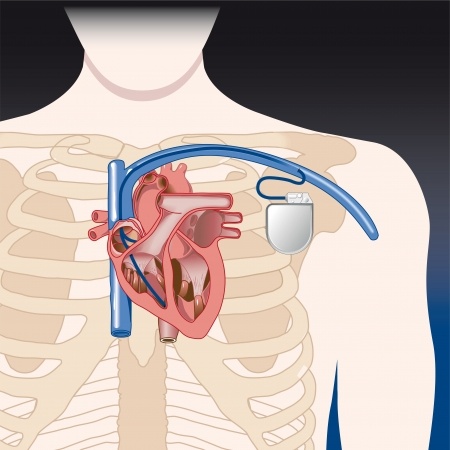
A cardiology expert witness advises on a pacing systems case involving a man, located in South Dakota, who underwent biventricular ICD placement with AV node ablation. The cardiologist positioned three leads in his heart: one to the right ventricle (RV), one to the left ventricle (LV), and one to the right atrium.
During a check of the pacemaker in the cardiologist’s office, the technician noted he was unable to capture the RV lead. The right ventricular lead’s sensing on this date was 2.3 millivolts. Since the RV lead was not capturing, the cardiologist performed a lead revision, in which the right ventricular and atrial leads were disconnected and repositioned.
Several months later, the right ventricular lead’s sensing was 2.8 millivolts, which was a significant decrease from the most recent prior reading of 11.5 millivolts about a month before.
Plaintiffs allege that the cardiologist was, or should have been, aware of the 2.8 millivolts reading and he did nothing to investigate the cause of the low value. Two months later, the decedent went into cardiac arrest. An x-ray confirmed that the right ventricular lead was dislodged and had retracted to the right atrium.
The decedent suffered respiratory failure leading to an anoxic brain injury and sepsis before he died two months later.