
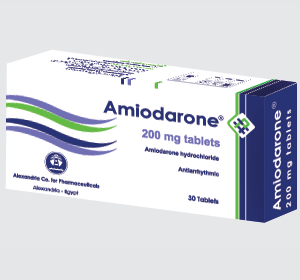
This case involves a sixty-year-old woman who was being treated by a cardiologist after she sustained cardiac arrest. It was determined that the patient had experienced an episode of ventricular fibrillation. Her cardiologist decided to prescribe her amiodarone for her arrhythmia. She voiced concerns to her physician that she did not like to take medication because of the side effects. Her physician explained that side effects were rare with amiodarone and that she did not need to be concerned. She was scheduled for a follow-up appointment in one month. Due to scheduling problems, the woman was not seen by her physician for two months. At her follow-up appointment, she told the cardiologist that she had been experiencing shortness of breath and cough. She was referred to a pulmonologist who determined that she sustained lung damage evidenced by abnormal pulmonary function tests and a decreased diffusing capacity. An x-ray of her chest revealed pulmonary fibrosis. The pulmonologist told the woman that she most likely developed pulmonary fibrosis secondary to amiodarone therapy. Additional laboratory work also revealed that her thyroid hormone levels were low and her liver enzymes were elevated. It was recommended that she be switched to another medication to treat her arrhythmia. A few months later, her thyroid and liver function tests returned to baseline. However, she still experienced pulmonary symptoms which required lifelong immunosuppression.