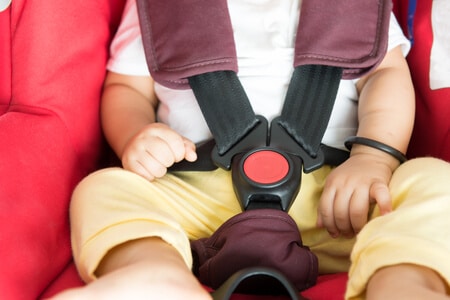
Five point harness seats are generally considered the safety standard in motor vehicles; this design is even mandated in NASCAR vehicles. The five different straps hold young children securely to the seat, minimizing the risk of ejection in the event of a car accident. Despite the fact that the five-point harness is the safest design, some manufacturers continue to use outdated, unsafe child safety seats with one- and three-point restraints. In T-shield seats, the straps that go over the child’s shoulder and between their legs are attached to a hard plastic or molded rubber shield. The shield is not snug, but stays several inches in front of the body. In accidents, the space between the child and the shield actually allows for a gain in momentum before hitting the restraint. The shield’s positioning and material puts children in risk of trauma to the head, chest, and abdomen. In the case of a crash, the T-shield may also impact the top of the child’s throat and puts pressure on back tissue, possibly leading to back and spinal cord injury. I would need to examine the specifics of the car seat in question, but given the circumstances of the case (with it being a relatively minor car accident and the child being in a T-shelf seat), the associated harm was not reasonable and likely caused by the design of the seat. I am also aware of other cases where similar injuries have occurred from minor accidents. I have over thirty years of engineering experience, analyzing automobile accidents, the design of seating (for both adults and children), and seat belt placement.