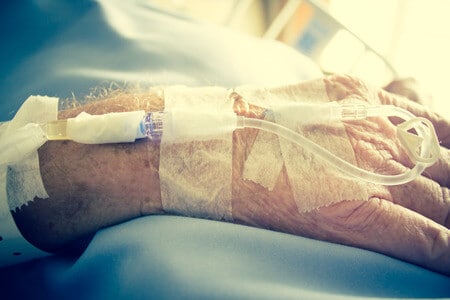
This case involves a fifty-nine-year-old male who presented to the ER with complaints of slurred speech, nausea, dizziness, and a brief loss of consciousness. The patient was then transferred to a tertiary care center for a suspected cerebrovascular event. However, no workup for stroke was provided and, as a result, the patient died of a massive stroke. The patient had standing orders that included a work up for a TIA that included an MRI/MRA, echocardiogram, and a carotid doppler. These tests were scheduled for the following morning, but the patient died overnight. It should be noted that the patient was not given any type of thrombolysis, anticoagulation, or antiplatelet treatment to prevent or treat the signs and symptoms of a stroke.
Question(s) For Expert Witness
- 1. What is the standard treatment for stroke in the acute setting?
Expert Witness Response E-000320
The goal for the acute management of patients with stroke is to stabilize the patient and to complete initial evaluation and assessment, including imaging and laboratory studies, within sixty minutes of patient arrival. Critical decisions focus on the need for intubation, blood pressure control, and determination of risk/benefit for thrombolytic intervention. Current treatments for acute ischemic stroke include IV thrombolytic therapy with tissue-type plasminogen activator (t-PA) and endovascular therapies, including intra-arterial thrombolytic therapy and the use of clot retrieval devices. Newer stroke trials have shown the benefit of using neuroimaging to select patients who are most likely to benefit from thrombolytic therapy and the potential benefits of extending the window for thrombolytic therapy beyond the guideline of three hours with t-PA and newer agents.
Contact this expert witness
Related Posts
This case involves a female patient who underwent a breast reduction surgery and developed an infection, which led to necrosis and death of the areola tissue. The patient underwent several additional surgeries to reconstruct a nipple that was met with…
This case involves a seventy-one-year-old female patient who underwent an epidural injection in the lumbar spine. Since the injection, the patient has experienced significant pain and weakness and she had great difficulty ambulating. According to the treating radiologist, there was…