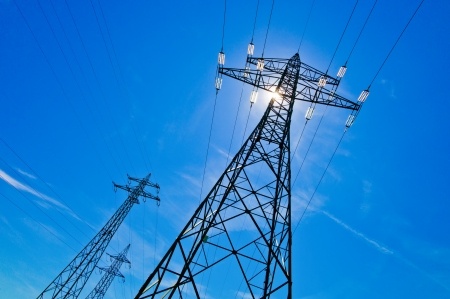
Based upon my knowledge of industrial and construction machinery safety and design practices in general, and man-lift and crane machinery, in particular (including the theory, history and capabilities of proximity warning devices for high voltage transmission lines), and based upon my education, background and experience, the following summarizes my professional opinions on the improper, inadequate, defective and unreasonably dangerous design of subject lift.
The lift was defective:
A. In failing to provide an integral high-voltage proximity warning system for the bucket of the man-lift, which would sense dangerous electric field strengths around the occupant of the bucket, provide both a visual and audible alarm to the operator of the impending danger, and automatically stop motion of the bucket if the proximity reading exceeded critical levels.
As documented by various agencies over the years, working near high voltage lines in non-insulated aerial man-lifts has resulted in numerous fatal and near-fatal electrocution accidents, despite the many warnings, behavioral instructions, assignment of responsibilities to various participants, and training programs espoused by the standards associations, OSHA, NIOSH, and the manufacturers of the equipment. All of these, from the safe product and machine designer’s perspective, fall into the least-effective category of reducing the risk of injury from a product hazard: warnings and instructions. The reason is that all humans have limitations which prevent them from being perfect all the time, particularly when they are multi-tasking in a hazardous environment.
The practical and economical technology of sensing electric field intensity (and direction of increasing field intensity) has existed for well over 30 years. The defendant patented a novel high voltage proximity detection system in 2001. Other commercial high-voltage proximity warning systems have existed for well over 25 years. Thus it is incomprehensible to me, as an educator and designer, that the defendant has completely skipped and by-passed the known and effective design options for vastly reducing and practically eliminating the high voltage line hazard in the design of this lift. Incorporating such devices on the lift could be done at a nominal cost and would not impair the usefulness or utility of the product, while vastly enhancing its safety.
The expert is a licensed Professional Engineer who taught mechanical engineering for nearly 40 years and has been involved in safety design for numerous products.