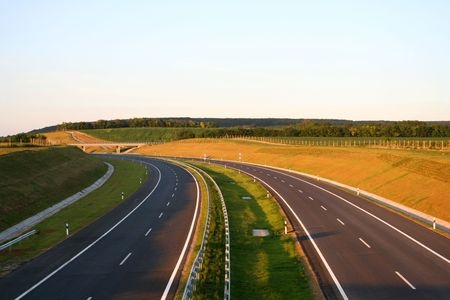
The two American Association of State Highway and Transportation Officials (AASHTO) Roadside Design Guides (RDG) are well-known transportation engineering standards applicable to the subject portion of the interstate. Chapter Six in both RDG’s deals with median barriers and contains guidance regarding when median barriers should be considered or provided.
Generally speaking, there are two kinds of median barrier warrants: volume/width warrants and accident warrants. The state Department of Transportation previously determined that the volume/width warrant could no longer be applied in the state because it did not adequately protect the public. The volume/width warrant generally does not recommend a barrier for freeway medians as wide as 80-feet. However, under AASHTO’s accident warrant, median barriers can and should be installed when, in the exercise of engineering study or engineering judgment, there have been an unacceptable number of median crossover crashes. Consequently, the DOT decided to install median barriers on most urban freeways, based on an adverse history of crossover collisions in the area. Based on an average crossover rate of 0.012 crashes per mile, the DOT correctly installed median barriers on almost all area freeways. The crossover crash rate for the 7-mile stretch of highway at issue in this case, was 0.349 crossover crashes per mile, which is 29 times higher than the accident warrant rate the DOT applied.
Sound transportation engineering judgment, including the DOT’s own standard for installing median barriers, due to adverse histories of crossover crashes, required it to provide a median barrier at and near the subject location prior to the accident. The DOT, by failing to provide a median barrier at the subject location, failed to comply with generally accepted highway engineering standards and failed to take reasonably necessary steps to protect the public.
The expert is a professional engineer with more than 25 years of traffic engineering experience. He has conducted safety research and is an engineering professor familiar with AASHTO standards.