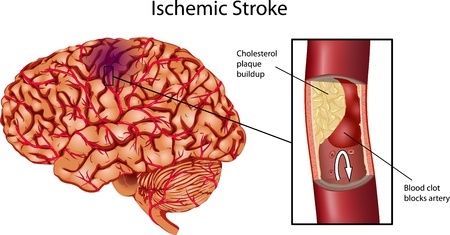
A neurology expert witness for the defense opines on a case involving a woman who alleges that delayed EHS treatment made her stroke worse. Plaintiff from Arizona was fifty-two-years-old when she suffered a second stroke. She went to the emergency room (ER) of the defendant hospital complaining of a headache for a week. Her blood pressure was significantly elevated. Over the course of several hours, the plaintiff’s condition worsened. She developed right-side weakness, slurred speech and right facial droop. She alleges that none of the guidelines for treatment of acute ischemic stroke were followed by the hospital. No significant treatment was offered to the plaintiff during the 10 hours she was at the emergency room until she was transferred. She was not even given aspirin, even though the CT showed no hemorrhage.
Upon arrival at another hospital, she received anticoagulant treatment: Lovenox by injection, a low molecular weight heparin. Full dose heparin was later added in place of the Lovenox.
Because the plaintiff presented to the defendant emergency room when the symptoms were still just prolonged headache and significantly elevated blood pressure (and history of recent minor stroke), the only reasonable assumption, she argues, is that appropriate and timely care, would probably have resulted in a far better outcome.