
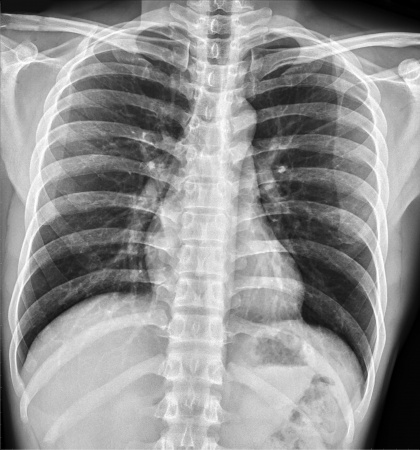
This case involves a thirty-five-year-old female who presented to her neurologist with difficulties swallowing. Her past medical history included myasthenia gravis and hypertension. She first established care with her neurologist when she was diagnosed with myasthenia gravis, an autoimmune neuromuscular disease. Based on these findings, the neurologist believed that she experienced an exacerbation of myasthenia gravis. He increased the dosage of her medication, pyridostigmine, despite the fact that she was not having any other symptoms. He then scheduled her for a one-month, follow-up appointment. Over the next month, she developed chest pain, shortness of breath, cough, and facial plethora which caused her to go to the hospital. At the ER, a CT scan was performed which revealed an anterior mediastinal mass. Biopsy confirmed that the woman had a stage III thymoma and was scheduled for a thymectomy. After surgery, she required months of radiotherapy and chemotherapy. One of the chemotherapy agents used to treat her condition was doxorubicin. Six months after chemotherapy, the woman’s ejection fraction was 25%. She was diagnosed with a dilated cardiomyopathy secondary to doxorubicin therapy. Between receiving chemotherapy for her thymoma and managing her cardiomyopathy, the patient experienced prolonged hospitalizations and pain.