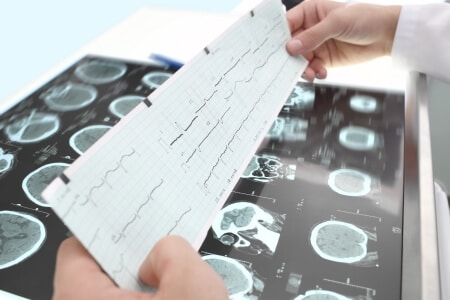
A patient originally hospitalized for a carotid endarterectomy suffered numerous severe respiratory complications from the procedure, sustaining irreparable nerve damage from a stroke in postoperative recovery. Though his vital signs and probability readings for both strokes and comas were low immediately after the operation, no further check-ups were ordered after the first day of his hospitalized recovery period. On the second day, however, he was noted to have right-sided weakness, deviation of the eyes and paralysis of his entire right side, and was intubated for inability to breathe. The patient quickly had a severe stroke, and a scan revealed that there was a large hemorrhage and enduring brain damage, which his family alleged was caused by his doctor’s failure to recognize and document changes in his vital signs.
Question(s) For Expert Witness
- 1. Do you routinely treat patients like the one described above?
-
2. Have you ever had a patient develop the same outcome or complications as this case?
Expert Witness Response E-040909
I am a board certified Neuroradiologist. I work at a comprehensive stroke center, where I interpret thousands of Brain MRI and CT imaging every year. I have seen hundreds of cases of stroke, am familiar with their imaging appearance as well as their proper follow-up and diagnostic procedures. I have been a lecturer on “stroke imaging” for the American College of Radiology, and reviewed many similar cases.
Contact this expert witness
Related Posts
After undergoing a standard laparoscopic myomectomy to remove fibroid tissue from her uterus, a woman faced severe ramifications after the procedure helped spread cancer throughout her body. The gynecologist had used a morcellator to divide the tissue into smaller pieces…
A patient with a history of mitral valve valvuloplasty faced complications during a procedure to replace his mitral valve, causing him to allege that his doctors had wrongfully recommended him for the operation. After undergoing an elective laparoscopic mitral valve…