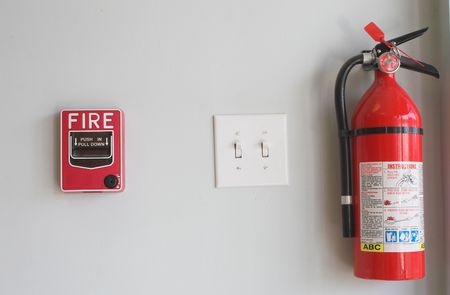
The store failed to comply with building codes and fire codes by improperly and unsafely mounting the fire extinguisher. If it were properly and safely mounted, as described in the codes, it would have withstood the impact of the cart and would not have fallen on her foot. The store either knew or should have known that a safety violation existed.
The store failed to provide mounting brackets to adequately support the load of the fire extinguisher, even though these brackets are readily available at reasonable cost and are provided at other locations owned by the retailer.
The store failed to prove safety devices, such as a rubber ring for the bottom of the extinguisher, even though these devices are available at a reasonable cost and are on extinguishers in other stores owned by the retailer. The rubber ring would have provided a measure of safety upon impact.
The store failed to provide any warnings that a fire extinguisher was in a path of travel. The store should have known that an additional warning would have provided a safer environment.
The store did not use reasonable care to prevent hazards, did not maintain the location in a reasonably safe condition. The store should have known that these measures would have contributed to the safety of the patrons in the store and that these safety components are dictated by code and by industry standards.
The store should have known that the danger was open and obvious. The danger and the store’s negligence in failing to warn of this danger was a direct cause of the plaintiff’s injuries.