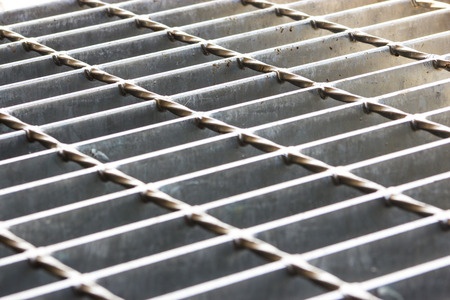
No provision was made to make the aluminum material of the grate slip resistant. While this detail looks innocuous, aluminum at this location, when wet, has a much lower coefficient of friction when in contact with typical footwear. The coefficient of friction between rubber and wet aluminum is significantly lower than .5, which is the threshold for safety. Numerous tests have been conducted and published which place the friction level at 0.30 -. 40. No abrasive material was included to increase traction at this point.
The state adopted the International Building Code for commercial and residential buildings. It applies to all cities in the state. The building code, IBC section 1003.4, stipulates that all walking surfaces must be slip resistant, including sidewalks. This would also be in violation of International Property Maintenance Code 302.3 and would constitute a slipping hazard.
Based on the physical evidence at the site, a review of industry standards and locally adopted building codes, plus my own publication and experience with dozens of similar accidents, it is my professional opinion with a reasonable degree of certainty that the designer of this product was in violation of industry standards and locally adopted building codes on the day it was installed. This product, which was prefabricated, was hazardous and not suitable for walking surfaces. The code violations were directly contributable to the injuries sustained by the plaintiff.
The expert is a civil engineer who has extensive experience studying and applying international building codes.