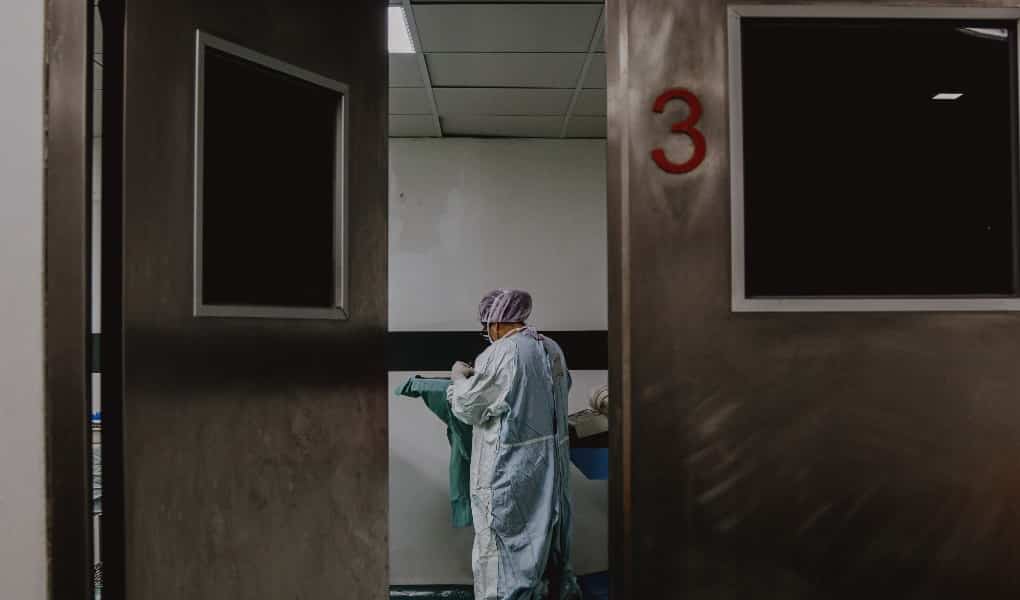
The patient presented to her primary care physician complaining of atypical chest pain. The treating physician ordered investigation and it was determined that the dissection was growing and most likely responsible for the new onset pain. After an extended workup it was decided that the patient required an open repair of the descending aortic aneurysm. The patient was taken to surgery and the procedure was conducted under hypothermic circulatory arrest with cardiopulmonary bypass through right leg and spinal cord drainage. The surgery was successful and was not met with any complication. In the post-operative period the patient complained of right leg pain at which point a vascular consult was requested. The vascular surgeon diagnosed the patient with compartment syndrome of the right lower limb. The patient required a fasciotomy to relieve the rapidly increasing pressure which was causing her causing excruciating pain. There were also concordant lab value arrangements including increasing creatinine levels and a severely elevated CK. The patient suffered from rhabdomyolysis that went undiagnosed and untreated for some time. When the condition was finally recognized it had progressed rapidly and there was no longer anything that could be done salvage the limb. The patient underwent a below-the-knew amputation of the right limb to prevent further advancement of the condition.
Question(s) For Expert Witness
- 1. Should the patient’s rhabdomyolysis have been picked up earlier.
-
2. Had the condition been diagnosed sooner could the amputation have been prevented?
Expert Witness Response E-001075
In a rapidly progressing disease like compartment syndrome, a diagnosis needs to be made and treatment initiated in a timely manner in order to prevent limb complications. The timing of treatment is directly linked to the prognosis. That is to say, the sooner the patient is treated, the better the outcome is. If the patient’s clinical picture indicated the development of compartment syndrome and those signs were missed by the treating physicians this would be a departure from the standard of care given the time sensitive nature of treatment. Had the diagnosis have been made when the condition first developed it is likely that the patient would not have suffered these unfortunate sequalae. A thorough review of the medical records would reveal whether or not an earlier diagnosis could have been made and if any crucial signs were missed.
Contact this expert witness
Related Posts
A critical care expert witness advises on a case happened in New Hampshire involving a patient who died as a result of aspiration pneumonia following a traumatic brain injury. This case involves a fifty-five-year-old female patient who died as a…
A hematology expert witness opines on a case involving a twenty-nine-year-old female patient with a past medical history of atopy, including eczema, hay fever and asthma. Her primary care physician prescribed Cymbalta when she began experiencing ADD and anxiety symptoms.…