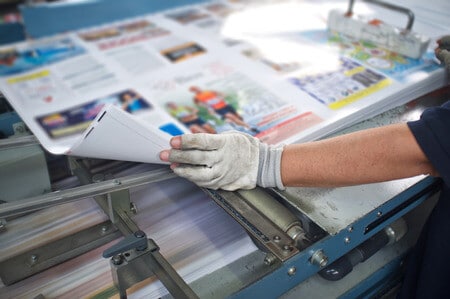
43474835 - post press finishing line machine: cutting, trimming, paperback and binding
This case involves a print shop worker who passed away from myeloid leukemia after 23 years of employment. The North Carolina print shop where he worked specializes in large-format printing and uses benzene solvent in their inks to prevent rapid drying. It was alleged that the friction from the shop’s machinery allowing the benzene fumes to escape more rapidly, exposing the deceased to higher concentrations of the solvent, and subsequently causing his death. An expert in industrial hygiene was sought to opine on health and safety standards, particularly in the printing industry, that should be in place to prevent or limit this type of exposure.
Question(s) For Expert Witness
- 1. Please describe your industrial hygiene experience with regards to toxic chemicals like Benzene.
-
2. Are you familiar with studies and/or literature link Benzene exposure to AML?
-
3. If yes, what does the literature say with regards to causation in these cases?
-
4. What standards are or should be in please to prevent or limit this type of exposure?
Expert Witness Response E-008419

I have over 38 years of experience as a health and safety professional in the manufacturing, construction, and public service sectors. I have been involved in a number of benzene and asbestos cases and have experience with benzene in particular from my time at an agricultural biotechnology corporation.
Benzene, a colorless, flammable liquid with a sweet odor, is one of the 20 most widely used chemicals in the United States and has been linked in literature to Acute Myelogenous Leukemia (a cancer of the blood and bone marrow), which is a sub-type of non-Hodgkin lymphoma (NHL). Several studies have been conducted (particularly the National Cancer Institute and followup counter studies by oil interest involving the Shanghai project) concerning the link between benzene and cancer. According to OSHA CFR 1910.1028, the current benzene time-weighted average limit (TWA) is one part of benzene per million parts of air (1 ppm). If it can be shown that their job duties involved direct exposure to crude petroleum (which contains levels of benzene), I think you have a strong case. I am of the opinion that there is no safe level of exposure to a carcinogen (particularly involving asbestos and benzene).
Contact this expert witness
Related Posts
This case involves a group of children that were seriously injured in an icy parking lot near their middle school. The owner of the parking lot had allowed the lot to become completely covered in ice and snow, allegedly due…
This case involves an insurance bad faith claim levied against a medical insurance provider. The plaintiff, a middle-aged woman who hadn’t received medical coverage in many years, applied online for a policy to be effective the next day. The day…